
Schneider LC1E400 Contactor
Product description
Product Positioning
The Schneider LC1E400 is a 400A high-current AC contactor belonging to the EasyPact TVS series. Specifically designed for industrial applications, it is used to control electric motors, lighting equipment, and other high-power loads.
Core Parameters
| Parameter | Specification |
| Rated Operating Current | 400A (AC-3 Duty Cycle, ≤55°C) |
| Rated Insulation Voltage | 690V AC 50/60Hz |
| Conventional Heating Current | 500A (≤40°C) |
| Control Coil Voltage | Multiple options available: 110V/220V/380V/415V AC 50/60Hz |
| Main Contact Configuration | Standard type: 3P (3 Normally Open/3NO); 4P (4 Normally Open/4NO) version also available (LC1E40004 series) |
| Maximum Operating Frequency | 2400 operations per hour (≤55°C) |
| Mechanical Life | 4 million operations |
| Electrical Life | AC-3 Duty Cycle: ≥100,000 operations |
| Protection Degree (IP Rating) | IP00 (No Protection) or IP20 (Finger-proof Protection) |
| Applicable Ambient Temperature | 5~55°C; Storage Temperature: -60~80°C |
| Weight | Approximately 9.1kg |
| Dimensions (Width × Height × Depth) | 213×375×219mm |
Duty Cycles and Applications
Main Duty Cycles:
- AC-3: Used for starting and stopping squirrel-cage motors, which is the most common industrial application.
- AC-1: Used for controlling non-inductive or slightly inductive loads, such as resistance heating equipment.
Typical Application Scenarios:
- Motor control systems (power range: 220kW@415V to 280kW@690V)
- Control of AC loads with a power factor ≥0.95
- Industrial automation equipment
- Master switch control for lighting systems
- Other industrial applications requiring high-current switching
Technical Features
Performance Advantages:
- High making and breaking capacity: Capable of withstanding a making current of 4000A and a breaking current of 3200A (440V AC)
- Short-time withstand current: 3600A (≤40°C, 10 seconds), enhancing system reliability
- Wide voltage operating range: The control coil operates stably within 85%~110% of the rated voltage, does not actuate below 70%, and releases reliably within 35%~50%
- Low power consumption design: Only 15VA required in the holding state, reducing energy consumption
- High anti-interference capability: Withstands 8kV impulse voltage, suitable for harsh industrial environments
Structural Features:
- Two installation methods: base mounting or DIN rail mounting, facilitating on-site deployment
- Main circuit wiring: Can connect 2×150mm² cables or 30×5mm copper busbars, with a tightening torque of 35N·m
- Control circuit: Bolt-fastened terminals, capable of connecting 1~4mm² wires, with a torque of 1.2N·m
- Modular design, allowing addition of accessories such as auxiliary contacts and overload protection
Model Coding Explanation
LC1E400X7:
- LC1: Standard prefix for Schneider contactors
- E: EasyPact TVS series
- 400: Rated current of 400A
- X: Coil voltage code
- F: 110V AC 50/60Hz
- M: 220V AC 50/60Hz
- Q: 380V AC 50/60Hz
- N: 415V AC 50/60Hz
- 7: Suffix, indicating standard type (50/60Hz)
Note: The LC1E40004 series is a 4-pole version (4NO) with a rated current of 60A (AC-1), mainly used in special control circuits.
Application Recommendations
1. -Selection Key Points: Choose the appropriate duty cycle based on the load type (AC-3 for motor control, AC-1 for resistive loads)
2. Environmental Considerations: The installation location should be well-ventilated, with an ambient temperature not exceeding 55°C
3. Supporting Protection: It is recommended to use it with appropriate overload protection devices (such as thermal relays) to protect the motor and the contactor itself
4. Cable Selection: For the main circuit, select cables with sufficient cross-sectional area (≥150mm²) to ensure low-impedance connection
5. Maintenance Cycle: Regularly inspect the contact status; a comprehensive inspection and cleaning at least once a year is recommended
Summary
The Schneider LC1E400 is a reliable and efficient industrial-grade contactor. With its 400A high-current handling capacity and robust design, it has become an ideal choice for motor control and high-power load management in various industrial applications. For more detailed technical parameters or special application solutions, it is recommended to refer to the official Schneider Electric manual or
More recommendations
-
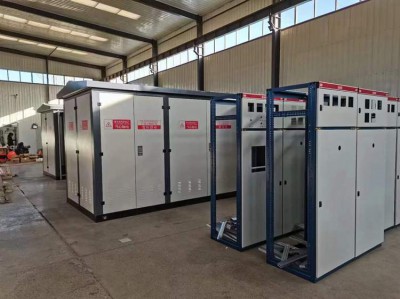
Schneider LC1E400 Contactor
-
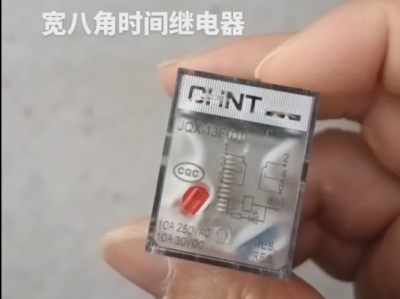
Chint JQX13F Electromagnetic Relay
-
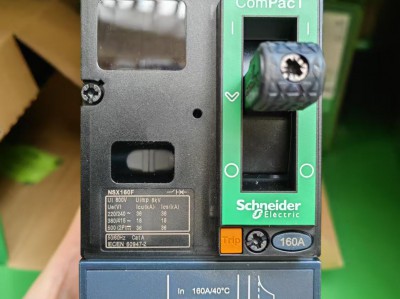
Schneider C16F2TM160 Circuit Breaker
-
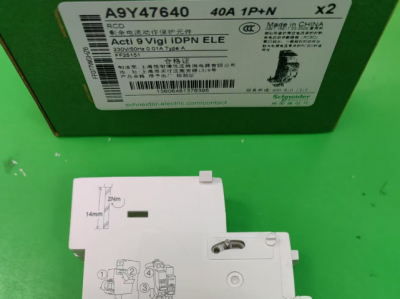
Schneider A9Y47640
-
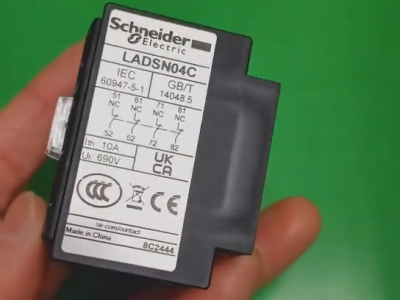
Schneider LADN04C
-
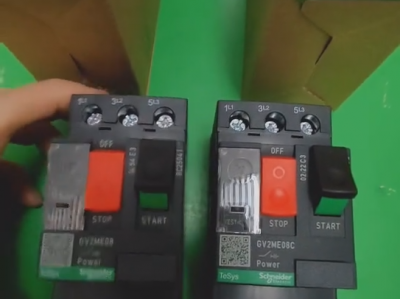
Schneider GV2ME08C motor circuit breaker
-
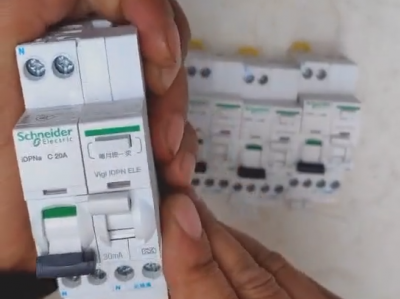
Schneider IDPNa C20A miniature circuit breaker (MCB)
-
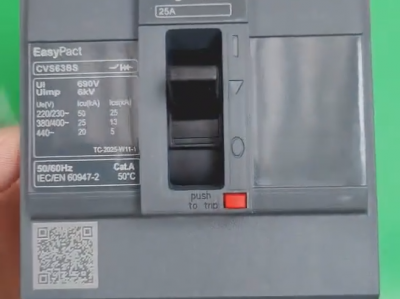
Schneider CVS63BS25A molded case circuit breaker (MCCB)
-
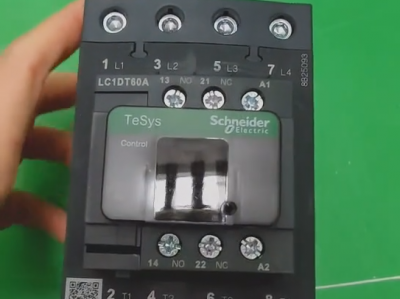
Schneider LC1DT80 4-pole contactors
-
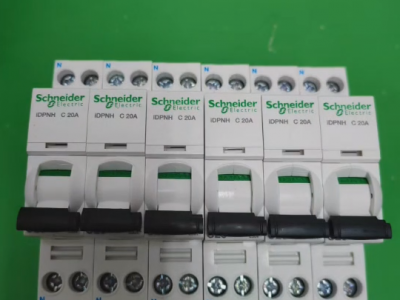
Schneider Electric Circuit Breaker Model A9P28620